
 Canada
  United Kingdom
  United States

The Ultimate Guide To Playing Card Dimensions
Most playing cards come in a standard size, but a variety of sizes and dimensions are available. The size of cards is different according to the type of game and design. Every business or designer should be aware of the size of the card according to the game. In this way, choosing the right playing card size is important for comfort as well as readability and handling. If the card is the perfect size, it will make the player comfortable holding it. It also affects the ideal printing and packaging. Understanding the standard dimensions can help you select the right format.
Card dimensions also play an important role in packaging. A properly sized card box or protective bag keeps the deck secure while enhancing its overall presentation. With the ultimate guide to playing card dimensions, you will know the exact size for your card.
The complete details of standard playing card sizes, as well as popular card dimensions and the measurements you should consider when designing or manufacturing a deck.
Standard playing card size in Inches and Centimetres
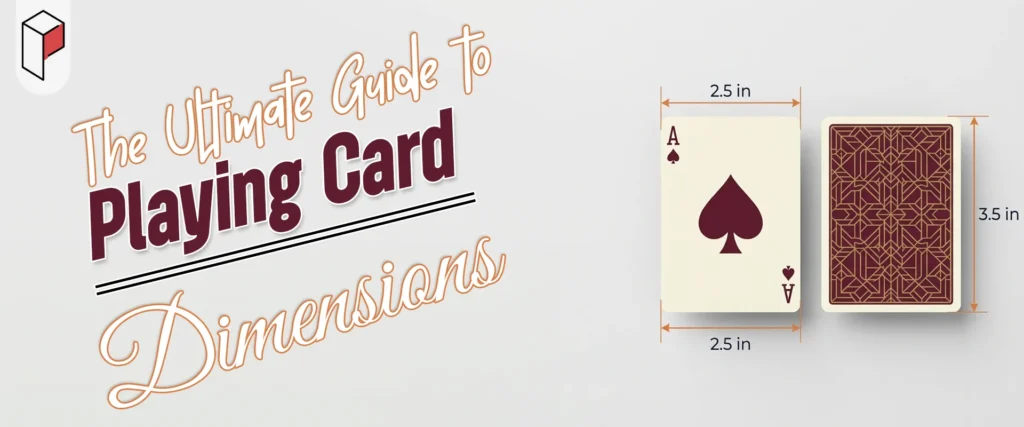
The size of a standard playing card is approx 3.5″ in height and 2.5″ in breadth. This size is widely used for poker playing cards and provides a comfortable balance between handling as well as readability, and portability.
Standard Playing Card Dimensions in Centimetres
| Dimensions | Size |
| Width | 6.35 cm |
| Height | 8.89 cm |
| Aspect ratio | approx 5:7” |
There is not a single size that applies to every type of playing card. Bridge cards, miniature cards, tarot cards, educational cards, and custom game cards can all have different dimensions.
Table of Playing Cards Size and Dimensions
I’m providing the complete table of common playing card formats and their typical dimensions. Exact measurements may vary by manufacturer, game, region, and design requirements.
| Card Type | Preferred Size | Dimensions Size |
| Blackjack | Standard | 2.5” X 3.5” |
| Miniature Cards | Small | Depends on Design |
| Art Collection | Custom Size | Varies on Design |
| Poker Cards | Standard | 2.5 X 3.5 in |
| Double Poker Card | Large | 5″ x 3.5″ |
| European Playing Cards | Varies | According to format |
| Jumbo Index playing cards | Standard/Large index | Varies |
| Bridge cards | Narrow | 2.5” X 3.5” |
| Bicycle Playing Cards | Standard Poker Size | 2.5 X 3.5 in |
| Tarot Cards | Tarot | 2.75” X 4.75” |
| Oracle Cards | Custom | Varies by Deck |
| Educational Cards | Custom | Depends on Purpose |
| Jumbo Cards | Oversized | Varies by design |
| Trump Cards | Varies | Varies by deck |
| Flashcards | Standard/Custom | Varies |
| Custom-Sized Game Cards | Custom | Based on game requirements |
The essential point is that the measurements above are a popular format but not global standards. The ultimate guide to playing card dimensions in the above table is based on global standards. You must verify the final parameters with your card manufacturer before production begins.
How long is a playing card
A standard playing card is approx 3.5” long and 2.5 inches wide, but the exact length depends on the type of card. Tarot cards are generally taller than standard poker cards. Meanwhile, bridge cards typically have the same height but are narrower.
How big are cards
The size of a playing card depends on its format as well as the type of gam,e but standard poker size is approximately:
- 2.5 inches wide
- 3.5 inches tall
- 0.88 inches wide X 1.38 inches tall when measured in CMs.
The metric measurements for accurate production are:
- 6.35 cm wide
- 8.89 cm tall
Other card formats may be smaller, larger, narrower, or wider depending on their intended use.
Dimensions of a Playing Card
It is crucial to take into account factors other than width and height when determining playing card measurements. With the ultimate guide to playing card dimensions, you will know the remaining factors. The following requirements should also be taken into account by designers and manufacturers:
1. Width and Height
The overall size and proportions of the card are based on width and height. Standard poker cards generally measure 2.5 X 3.5 inches, while bridge cards are typically narrower.
2. Corner Radius
Most playing cards have rounded corners rather than sharp corners. The corner radius affects the card’s appearance as well as handling and ability to move smoothly through a deck.
3. Card Thickness
Card thickness is another important specification when designing packaging. A single card may be relatively thin, but the total thickness of a deck depends on the number of cards and the stock used.
4. Bleed and Safe Area
If you are designing custom playing cards for printing, the artwork should extend beyond the final trim line to create a bleed area. Important text as well as logos and graphics should remain within the safe area to prevent accidental trimming.
5. Packaging Dimensions
The card box or packaging should be designed around the final dimensions and thickness of the complete deck. Allowances may be needed for the cards,s including coating as well as protective bags, and manufacturing tolerances.
Why Are Playing Card Dimensions Important?
Choosing the correct card dimensions can affect the overall experience of a game or product.
Properly sized cards should be:
- Comfortable to hold and shuffle
- Easy to read
- Suitable for the intended game
- Compatible with the selected printing process
- Easy to package and store
- Appropriate for the target audience
The card dimensions should be finalized before the design of packaging. When it comes to packing these cards, you can use Custom Playing Card Boxes. It helps to lower problems such as cards being too tight inside the box.
How to Choose the Right Playing Card Size
How the cards will be utilized determines the optimal card size. A standard poker size card is a common choice for traditional poker and casino-style games. Bridge cards are narrower and can be easier to hold when players need to manage a large hand. Tarot and oracle decks generally use larger formats to provide additional space for detailed artwork and illustrations.
The card dimensions should be selected based on the number of cards players hold for custom games. Also keep in mind the amount of information displayed on each card, as well as artwork requirements and the desired game boxes format.
Playing Card Size for Custom Printing
In the ultimate guide to playing card dimensions, now understand the key points for custom printing. If you are creating a custom deck, determine the final card dimensions before preparing your artwork.
Your production specifications may include:
- Finished card size
- Bleed area
- Safe area
- Corner radius
- Card stock
- Card thickness
- Printing method
- Surface finish
- Number of cards per deck
- Box dimensions
- Protective packaging
Working with these specifications from the beginning can reduce design changes and production issues later.
Final Thoughts
Playing card dimensions may seem simple, but the right size can make a significant difference in how a deck looks as well as feels and performs. The 2.5 X 3.5 standard poker size is one of the most widely recognized formats. But many other sizes are available for different games and applications. Packprints is the right company to get the best packaging for all types of playing cards.
It is an important part of the design and manufacturing process to select the correct dimensions. Whether you are producing traditional playing cards or a completely custom game. Always confirm the required dimensions and packaging specifications with your card manufacturer.